
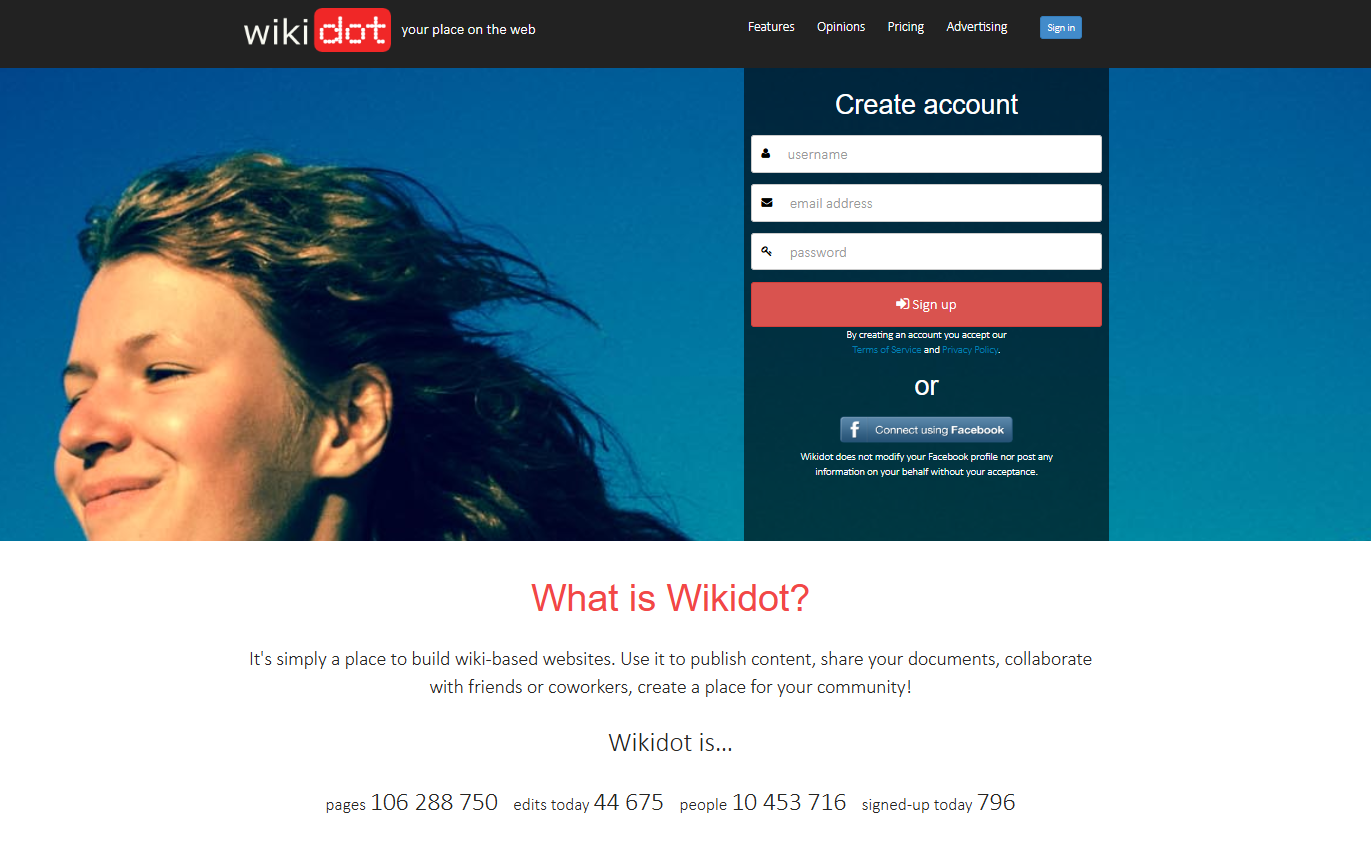
Have you ever wanted to build a wiki without touching a single line of server code? Wikidot makes that possible. It has hosted collaborative websites since 2006, and many creators still use it today.
This guide breaks down what Wikidot actually offers. You will learn its history, its core features, its pricing, and where it stands right now. Every fact here comes from verified, publicly available sources.
What Is Wikidot?
Wikidot is a wiki hosting service, often called a “wiki farm.” A wiki farm lets anyone create and manage a wiki-based website without installing software or renting a server.
Wikidot Inc. owns and operates the platform. The company built its technology in Toruń, Poland, and it still supports a large network of user-created wikis today.
Users sign up, choose a name, and instantly get a working wiki on a Wikidot subdomain. Site owners can also connect a custom domain if they prefer their own branding.
A Brief History of Wikidot
Michal Frackowiak founded Wikidot on August 1, 2006. The platform grew quickly and became one of the largest wiki farms in the world within just a few years.
By 2010, Wikidot supported roughly 570,000 users running about 150,000 sites, according to community-maintained wiki records. The platform kept adding around 900 to 1,000 new users every day during that growth period.
Wikidot moved its infrastructure to Amazon Web Services in September 2012. That same year, it won first prize in the AWS Global Start-Up Challenge under the Consumer Applications category.
The company later released an open-source version called Wikidot.org in January 2008. This version let developers install the same wiki engine on their own servers.
How Wikidot Works
Wikidot runs on a modified version of the Text_Wiki software engine. Every new site receives a free subdomain, such as yourwiki.wikidot.com.
Site owners edit pages using Wikidot’s own wiki syntax. This syntax differs from other wiki platforms, so first-time users often need a short learning curve.
The platform also includes a page-templating system. This system lets you change the look of an entire site from one central location instead of editing every page manually.
Wikidot’s ListPages module deserves special mention. It lets users build dynamic summaries, tables, and reports directly from existing wiki content, without writing custom code.
Key Features of Wikidot
Wikidot packs a surprising number of tools into a simple interface. Here are the features that site owners rely on most.
Collaboration and Permissions
Multiple users can edit the same page in real time. Site administrators control who can view, edit, or manage content through a built-in permissions system.
Private wikis remain popular on the platform. Community records show that more than 40% of all Wikidot sites are set to private.
Custom Domains
Wikidot allows free custom domain mapping for any site. Users simply point their domain’s DNS records to Wikidot, and the wiki loads under that custom address.
API Access for Developers
Every paid Wikidot account receives two API keys automatically: one read-only and one read-write. Free users can request API access through a dedicated developer page.
These keys work across five namespaces: categories, files, tags, pages, and users. Developers use them to pull or push data programmatically.
File and Media Support
Wikidot stores uploaded files securely on Amazon S3. Site owners can attach images, PDFs, and other documents directly to any page.
Wikidot Pricing: Free vs. Pro
Wikidot offers a free plan for anyone who wants to try the service. Free sites include storage limits, and Wikidot may display text ads on some free sites.
The Pro plan starts at $4 per month. This tier unlocks additional storage, removes certain restrictions, and gives users full API access.
Site owners who allow Wikidot to display ads on their pages can earn a share of the ad revenue. According to community documentation, Wikidot passes along 80% of that revenue to the site owner.
Famous Communities Built on Wikidot
Wikidot hosts thousands of niche communities, but one stands out globally. The SCP Foundation, a large collaborative fiction project, runs its main wiki on Wikidot’s infrastructure.
The SCP Foundation wiki even maintains its own Instagram presence tied to the community, showing how Wikidot-hosted projects extend beyond the wiki itself into social platforms.
Related Instagram account: @scpfoundationwiki
Wikidot’s Current Status: An Honest Look
Any trustworthy article about Wikidot needs to mention its recent challenges. Transparency matters, so here are the documented facts.
On May 19, 2022, Wikidot suffered a total server outage caused by a cyberattack linked to Russia. The site returned on May 24, 2022, and Wikidot then blocked access from Russia and Belarus.
A separate outage occurred on June 9, 2024. Community wiki editors have also noted that active development on the platform has slowed considerably in recent years.
User reports describe limited official communication from Wikidot’s team, along with a small support staff. Anyone considering Wikidot for a new project should weigh these operational realities against the platform’s long track record.
Despite this, Wikidot remains online and continues to host millions of pages across active communities. It has not shut down, and existing sites continue to function.
Is Wikidot Still Worth Using?
Wikidot still makes sense for certain use cases. It suits hobbyist communities, fan wikis, and collaborative fiction projects that need low-cost, flexible hosting.
It may not suit businesses that need guaranteed uptime, fast support, or frequent feature updates. Larger organizations often look toward alternatives like MediaWiki or Confluence for that reason.
Before committing, test the free plan first. Build a small site, invite a few collaborators, and see whether Wikidot’s syntax and tools fit your workflow.
Frequently Asked Questions
What is Wikidot used for?
Wikidot is used to create and host wiki-based websites. People use it for collaborative documentation, fan communities, educational projects, and shared knowledge bases.
Is Wikidot free to use?
Yes. Wikidot offers a free plan with basic storage and features. A Pro plan starts at $4 per month for expanded storage and full API access.
Who owns Wikidot?
Wikidot Inc. owns and operates the platform. Michal Frackowiak founded the company on August 1, 2006, and its technology was developed in Toruń, Poland.
Is Wikidot still active in 2026?
Yes, Wikidot remains online and hosts active communities. However, development has slowed, and the platform has experienced outages in recent years, including incidents in 2022 and 2024.
What is the largest community hosted on Wikidot?
The SCP Foundation is one of the most well-known communities hosted on Wikidot. It is a large collaborative fiction wiki with an active fan base across multiple social platforms.
Can I use my own domain name with Wikidot?
Yes. Wikidot supports free custom domain mapping. You can point your own domain to your Wikidot site through standard DNS configuration.
Leave a Reply