
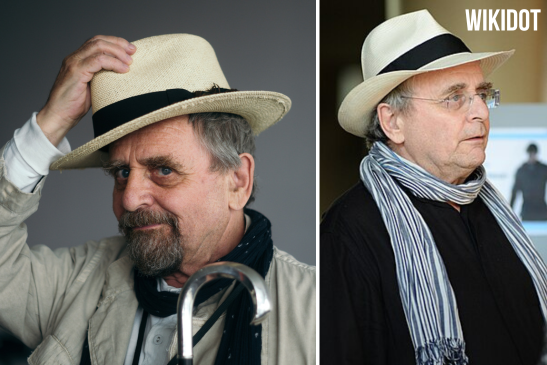
Sylvester McCoy: The Actor Who Became the Seventh Doctor
Sylvester McCoy holds a special place in British television history. He played the Seventh Doctor in Doctor Who, and he later charmed a new generation of fans as Radagast the Brown in The Hobbit trilogy. His career spans theatre, television, and film, and it stretches across more than five decades.
This article looks at his early life, his rise through British theatre, his time on Doctor Who, and the work he continues to do today. Every detail here comes from verified sources, including Wikipedia, IMDb, and official Doctor Who archives.
Who Is Sylvester McCoy?
Sylvester McCoy was born Percy James Patrick Kent-Smith on 20 August 1943 in Dunoon, Scotland. His mother, Molly Sheridan, was Irish, and his father, Percy James Kent-Smith, was English. His father served in the Royal Navy during World War II and was killed in action off Sierra Leone in April 1943, just months before McCoy was born.
McCoy grew up mainly in Dunoon. He attended St. Mun’s School and later studied for the priesthood at Blairs College, a seminary in Aberdeen. He left the seminary and continued his education at Dunoon Grammar School instead. He was raised in a religious household, though he later described himself as an atheist.
From Insurance Clerk to Comic Performer
Before he became an actor, McCoy worked in the insurance industry. He also worked at the box office of the Roundhouse theatre in London. That job changed his life. Director Ken Campbell discovered him there and invited him to join the Ken Campbell Roadshow.
This is where the name “Sylvester McCoy” was born. Campbell created a comic stuntman character for a show and, as a joke, credited the character to an actor named “Sylveste McCoy.” A theatre critic missed the joke and assumed the performer was real. Kent-Smith liked the idea and adopted the name permanently. He later added an “r” to the end of “Sylveste,” partly because thirteen letters were considered unlucky among performers.
His stunts in these shows were wild. He famously put forks and nails up his nose, stuffed ferrets down his trousers, and even set his own head on fire during performances. These acts built his reputation as a fearless physical comedian.
Early Television and Theatre Work
McCoy did not enter Doctor Who as an unknown. He built a strong career in British entertainment first. He played Pepe/Epep in the children’s programme Vision On, and he appeared in Tiswas and Jigsaw as well.
He also took on serious dramatic roles. In 1985, he played Henry “Birdie” Bowers in The Last Place on Earth, a television serial about Robert Falcon Scott’s final Antarctic expedition. He appeared briefly in the 1979 film adaptation of Dracula alongside Laurence Olivier and Frank Langella. On stage, he performed acclaimed one-man tributes to comedy legends Stan Laurel and Buster Keaton.
By the mid-1980s, McCoy was a respected stage actor. He was even starring in a play written specifically for him, The Pied Piper, at the National Theatre, when the BBC began searching for a new lead for Doctor Who.
Becoming the Seventh Doctor
In 1987, producer John Nathan-Turner cast McCoy as the Seventh Doctor, replacing Colin Baker. Baker had left the role under difficult circumstances and declined to film a regeneration scene. McCoy stepped in, wearing Baker’s costume and a blonde wig, so the transition between Doctors could still be filmed.
McCoy played the role from 1987 to 1989, making him the final Doctor of the original television run. His first season leaned into physical comedy, echoing his theatrical background. Script editor Andrew Cartmel later reshaped the character into something darker and more mysterious. Fans and critics still refer to this era as “the Cartmel Masterplan,” since it hinted at deeper secrets about the Doctor’s origins.
The BBC cancelled Doctor Who in 1989. McCoy’s tenure ended, but his connection to the role did not.
Life After the Original Series
McCoy briefly reprised the role in 1993 for the charity special Dimensions in Time. In 1996, he returned once more for the Doctor Who television movie, where his Seventh Doctor regenerated into Paul McGann’s Eighth Doctor. This made him the only actor to appear in both the original series and the 1996 television film.
Away from Doctor Who, McCoy stayed busy. He toured in “The Government Inspector” during 1993 and 1994. He starred as the Narrator in a stage adaptation of H.G. Wells’s “The Invisible Man.” He also appeared in “Zorro: The Musical” and took on television roles in Frank Stubbs Promotes and Rab C. Nesbitt.
He continued reprising the Seventh Doctor for Big Finish Productions, a company that produces official Doctor Who audio dramas. Like most actors linked to the franchise, McCoy has voiced the Doctor far more often in audio form than he ever did on screen.
Theatre Work and the Royal Shakespeare Company
McCoy’s stage career reached new heights when he joined the Royal Shakespeare Company. He played the Fool opposite Sir Ian McKellen’s King Lear in a celebrated 2007 production. He also performed in “The Lion, the Witch, and the Wardrobe” and took the title role in Gilbert and Sullivan’s “The Mikado” with the Carl Rosa Company in 2008.
His theatre credits reflect real range. He has played comic and tragic roles side by side, moving between musicals, Shakespeare, and one-man shows throughout his career.
Radagast and The Hobbit
In 2010, filmmakers announced that McCoy would play Radagast the Brown in Peter Jackson’s The Hobbit trilogy. Radagast is only mentioned briefly in Tolkien’s original book, but the films expanded the character significantly.
McCoy filmed his scenes for The Hobbit starting in 2011, reuniting with Ian McKellen, his former King Lear co-star, who returned as Gandalf. The role introduced McCoy to a global audience that may never have watched classic Doctor Who.
Later Career and Public Appearances
McCoy has stayed visible well into his later years. In 2013, he teamed up with former co-star Sophie Aldred on the celebrity game show “Pointless Celebrities.” That same year, he joined fellow former Doctors Peter Davison and Colin Baker in the comedy short “The Five(ish) Doctors Reboot” for the show’s 50th anniversary.
In 2016, he appeared in the BBC series The Real Marigold Hotel, travelling to India with a group of celebrities including Miriam Margolyes and Wayne Sleep. In 2022, he returned as the Seventh Doctor once again in the anniversary special “The Power of the Doctor.”
McCoy has also worked steadily in independent film and continues to accept theatre and screen roles.
Personal Life
McCoy married his wife, Agnes, and the couple has three children together, including a daughter and two sons. One son, Sam Kent-Smith, worked as a 3D artist on the Doctor Who video game Return to Earth. Reports also note that McCoy became a grandfather, and he once travelled by train from London to Thailand over six weeks to meet his first grandchild.
Instagram: https://www.instagram.com/sylvestermccoynews/ (Sylvester McCoy’s official newsfeed, run by his management team)
Follow Sylvester McCoy Online
Fans can follow official updates about Sylvester McCoy’s work and appearances on Instagram at @sylvestermccoynews. The account is managed on his behalf and shares news, event appearances, and personal updates with his input.
Frequently Asked Questions
Who is Sylvester McCoy? Sylvester McCoy is a Scottish actor best known for playing the Seventh Doctor in Doctor Who from 1987 to 1989. He also played Radagast the Brown in The Hobbit film trilogy.
What is Sylvester McCoy’s real name? His birth name is Percy James Patrick Kent-Smith. He adopted the stage name “Sylvester McCoy” after a comic stunt character he played under Ken Campbell became mistaken for a real performer.
Why did Sylvester McCoy leave Doctor Who? The BBC cancelled Doctor Who in 1989, ending its original run. McCoy’s era as the Doctor ended with the show’s cancellation, though he returned briefly in 1993, 1996, and 2022.
Did Sylvester McCoy play any role besides Doctor Who? Yes. He played Radagast in The Hobbit trilogy, appeared in The Last Place on Earth, performed with the Royal Shakespeare Company, and took on numerous theatre and television roles throughout his career.
Leave a Reply