
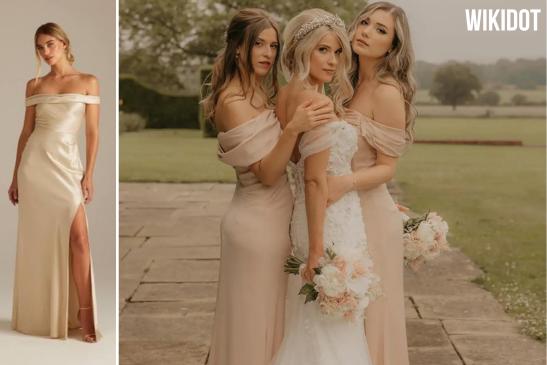
Choosing the right color for your bridal party sets the tone for your entire wedding. Champagne bridesmaid dresses have become one of the most requested shades for brides who want elegance without drama. This soft, warm neutral works across seasons, venues, and skin tones, which is exactly why it keeps showing up on mood boards year after year.
This guide breaks down everything you need to know before you order dresses for your bridal party: why champagne works, which fabrics look best, how to match it to skin tones, and how to style it for your specific wedding.
Why Champagne Is a Top Choice for Bridesmaid Dresses
Champagne sits between beige and gold, and that in-between quality is exactly why designers love it. Bridal fashion brand Adrianna Papell describes champagne gold as a shade that radiates glamour without pulling attention away from the bride, calling it a strong option for evening and black-tie celebrations.
The color also photographs beautifully. Because champagne reflects light rather than absorbing it, it creates a soft glow in photos, whether you’re shooting indoors under warm lighting or outside at golden hour. Bridal stylists at TH&TH note that champagne dresses remain a favorite for elegant city weddings specifically because they catch light so well and never look dated.
Champagne also fits into the bigger shift happening in wedding fashion right now. Brides are moving away from matching every bridesmaid in the exact same shade. Instead, they’re building tonal palettes with variations of one color family. The Dress Outlet points to this trend directly, describing bridal parties dressed in a mix of champagne, sand, and mocha tones as a way to let each bridesmaid find a shade that flatters her individually while keeping the whole group cohesive.
Best Fabrics for Champagne Bridesmaid Dresses
Fabric changes how champagne reads in person and in photos. According to Adrianna Papell, chiffon, satin, crepe, and tulle each show off the champagne hue differently, giving you either a soft matte finish or a subtle shine depending on your wedding style.
Here’s how each fabric typically performs:
- Satin adds a gentle sheen and drapes well, making it a strong pick for formal or black-tie weddings.
- Chiffon creates movement and softness, which suits garden or outdoor ceremonies.
- Crepe holds structure nicely and works for modern, tailored silhouettes.
- Tulle adds volume and a romantic feel, often used for ball gown styles.
If your wedding leans formal, satin or crepe will likely give you the polished look you want. If you’re planning something more relaxed, like a garden or vineyard wedding, chiffon tends to feel lighter and more natural.
Champagne Bridesmaid Dresses for Every Skin Tone
One reason champagne stays popular season after season is its versatility across skin tones. Adrianna Papell notes that champagne complements a wide range of complexions, from fair to deep, thanks to its neutral undertones, and it particularly flatters olive, medium, and warm skin tones.
This matters when you’re dressing a bridal party of different people. Unlike bolder colors that can wash out certain skin tones, champagne tends to sit comfortably across the board. That’s part of why it keeps appearing on lists of the most universally flattering bridesmaid colors, alongside shades like sage green and dusty rose.
Styling Champagne Dresses by Season and Venue
Champagne isn’t tied to one specific season, which gives you flexibility no matter when you’re getting married.
Spring and summer weddings: Champagne works well for garden ceremonies, beach weddings, and outdoor receptions. Fashion coverage from Rocky Mountain Bride highlights barely-there champagne tones as a favorite for rehearsal dinners and casual celebrations, noting how well they catch natural light.
Autumn weddings: Champagne pairs naturally with warmer tones like oyster and chocolate. TH&TH points out that these deeper neutral shades add depth and warmth to bridal party styling during fall.
Winter weddings: Adrianna Papell confirms champagne suits winter celebrations too, especially when paired with long sleeves or added texture like sequins for extra warmth and visual interest.
Black-tie and evening events: Champagne gold, with its subtle shimmer, reads as elevated and sophisticated, making it a natural fit for formal evening receptions.
How to Mix and Match Champagne Shades
If you want a curated, editorial look rather than a uniform one, consider building a full champagne-based palette instead of picking one single shade. The Dress Outlet describes this monochromatic approach as choosing a single color family, then letting each bridesmaid select a slightly different tone within that range, which creates a natural gradient effect across the group photo.
To do this well:
- Pick champagne as your base tone.
- Add adjacent shades like gold, bronze, sand, or oyster.
- Let each bridesmaid choose the tone that suits her skin tone best.
- Keep fabric and length consistent so the group still looks cohesive.
This method solves a common problem brides run into: wanting individuality for their bridesmaids without losing a unified look in photos.
Choosing the Right Silhouette
Champagne works with nearly every silhouette on the market right now, from fitted slip dresses to flowing A-line gowns. Designers have also expanded these styles to include more inclusive sizing, so champagne dresses are increasingly available in cuts designed to flatter a wider range of body types without sacrificing the overall aesthetic.
When choosing a silhouette, think about:
- Comfort: Bridesmaids need to move, dance, and sit comfortably for hours.
- Body confidence: Letting bridesmaids choose their preferred neckline or hemline within the same color and fabric keeps everyone happy.
- Wedding formality: Floor-length gowns suit black-tie events, while tea-length or midi styles work for semi-formal or daytime weddings.
Practical Tips Before You Order
A few practical steps can save you stress later:
- Order early. Most bridal experts recommend finalizing bridesmaid dresses eight to twelve months before the wedding to allow time for production and alterations.
- Order swatches first. Champagne can vary noticeably between brands, so see the fabric in person before committing.
- Check lighting at your venue. Champagne looks different under warm indoor lighting versus natural daylight, so consider where most of your photos will be taken.
- Think about rewear value. Champagne is neutral enough that bridesmaids can realistically wear the dress again for other formal events.
Instagram: https://www.instagram.com/explore/tags/champagnebridesmaiddresses/
Frequently Asked Questions
What skin tones does champagne complement best? Champagne flatters a wide range of skin tones, including fair, medium, olive, and deep complexions, thanks to its neutral, warm undertone.
Are champagne bridesmaid dresses good for outdoor weddings? Yes. Champagne looks especially soft and glowing in natural light, which makes it a strong choice for garden, beach, or vineyard weddings.
What fabric works best for a champagne bridesmaid dress? Satin and crepe suit formal weddings well, while chiffon and tulle work better for softer, more romantic styling.
Can champagne bridesmaid dresses work for a winter wedding? Yes. Adding sleeves or richer textures like sequins helps champagne dresses feel appropriate for cooler months.
Do all bridesmaids need to wear the exact same champagne shade? No. Many brides now mix champagne with adjacent tones like gold, bronze, or oyster to create a coordinated but individualized look.
Final Thoughts
Champagne bridesmaid dresses remain a top choice because they check every box brides care about: they flatter nearly every skin tone, work across seasons and venues, photograph beautifully, and offer real rewear value for your bridesmaids. Whether you choose one consistent shade or build a tonal palette, champagne gives your bridal party a look that feels elegant, timeless, and genuinely wearable long after the wedding day ends.
Leave a Reply