
You typed “guernsey potato society book” into a search bar, and here you are. Good instinct. This little phrase hides a genuinely charming story, a real slice of World War II history, and one seriously long book title that nobody types out in full unless they’re being paid by the word (hi, that’s me today).
Let’s untangle it properly.
There’s No Official “Guernsey Potato Society” — Here’s the Real Title
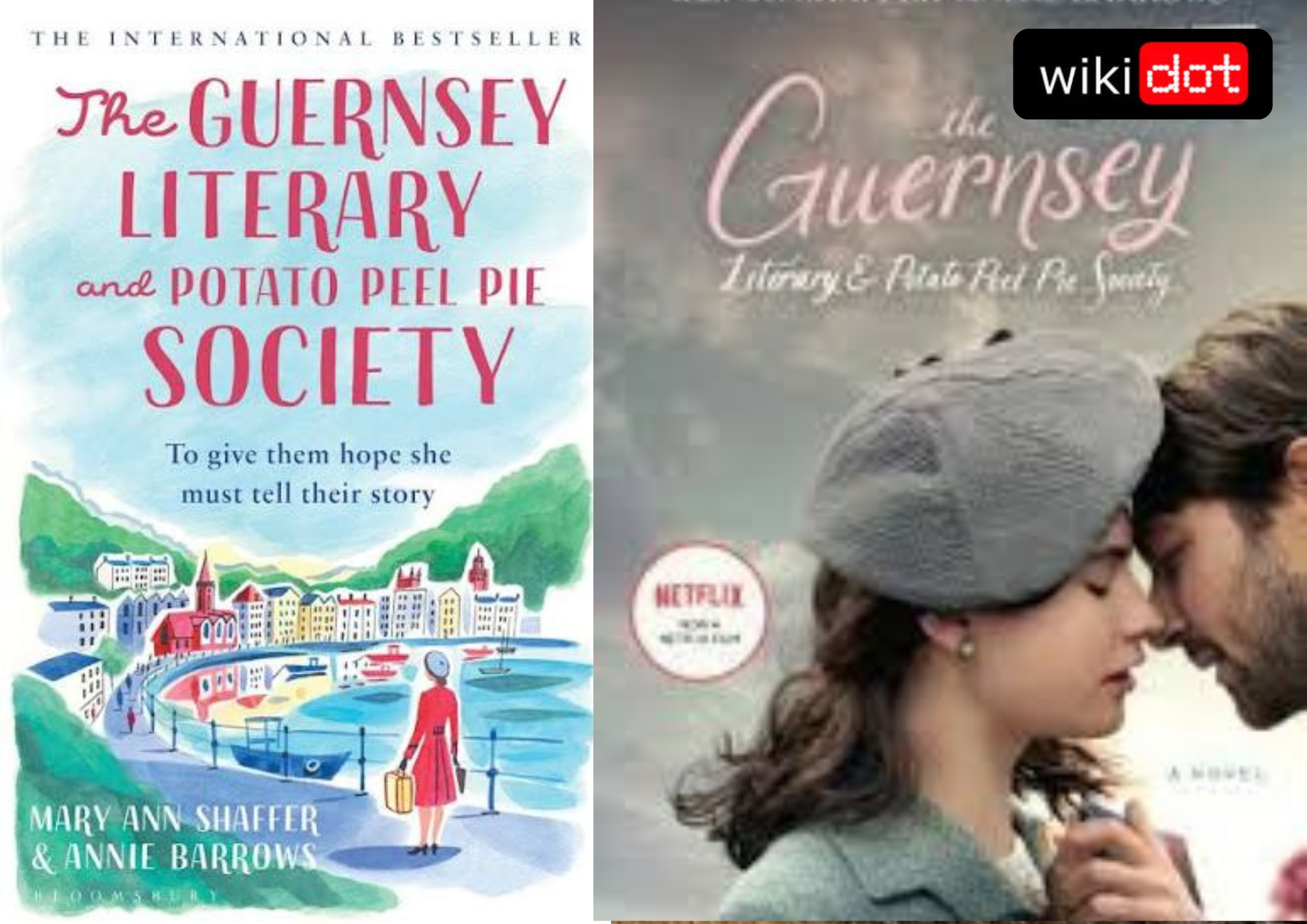
First, a quick reality check. No official club called the “Guernsey Potato Society” exists, and no membership card is waiting for you in the mail. The phrase is a shortened, easier-to-remember version of a real novel: The Guernsey Literary and Potato Peel Pie Society, by Mary Ann Shaffer and Annie Barrows.
People shorten it for the same reason they shorten “Pirates of the Caribbean: The Curse of the Black Pearl” to just “the first Pirates movie.” The full title is a mouthful. The short version sticks.
So if you came here hoping to join a real-life potato appreciation club on the island of Guernsey, I’m sorry to disappoint you. But the actual story is better than a club anyway.
Where the Odd Name Actually Came From
Here’s the fun part. In the novel, the “society” starts as a lie.
During the German occupation of Guernsey in World War II, a small group of islanders breaks curfew to share a roast pig they’re hiding from occupying soldiers. When the Germans catch them out after hours, they need an excuse — fast. So they claim they were coming home from a book club meeting. A book club that, until that exact moment, didn’t exist.
They name it on the spot: The Guernsey Literary and Potato Peel Pie Society. The “potato peel pie” part isn’t random flavor text, either. It’s a real wartime dish, made from potato peelings because proper ingredients like butter and flour were nearly impossible to find under occupation.
The fake book club eventually becomes a real one, because that’s what happens when people commit to a lie hard enough — it grows a soul.
Meet the Authors: Mary Ann Shaffer and Annie Barrows
Mary Ann Shaffer worked for years as an editor, a librarian, and a bookshop employee before she wrote this, her first novel (Amazon author bio). The idea reportedly came from a visit to Guernsey itself, where she got fogged in and, with nothing else to do, started reading about the island’s occupation history.
She finished the manuscript, sold it, and then her health took a sharp turn. Shaffer passed away in February 2008, months before the book reached shelves. She never held a finished copy.
Her niece, Annie Barrows — already known for the children’s book series Ivy and Bean — stepped in to complete the final edits and rewrites her aunt couldn’t finish. Barrows is credited as co-author, and the book carries both their names on the cover, a rare and moving example of family finishing what family started.
What the Book Is Actually About
The story unfolds entirely through letters — an epistolary novel, if you want the fancy term for your next trivia night.
It’s January 1946. London writer Juliet Ashton is touring to promote a book of wartime humor columns and quietly wondering what to write next. Then a letter arrives from a stranger named Dawsey Adams, a Guernsey resident who now owns a book that once belonged to her.
Their correspondence pulls Juliet into the lives of the whole “society” — a warm, odd, funny group of islanders. As she learns their occupation-era stories, one name keeps surfacing: Elizabeth McKenna, the society’s founder, who was arrested by the Germans and never came home. Juliet eventually travels to Guernsey herself to learn what really happened, and the island changes her life in ways she didn’t see coming.
No spoilers on the ending here. Go read it. It earns the tears.
The Real History Hiding Inside the Fiction
This is where the book stops being just a cozy read and starts being genuinely educational.
Guernsey, part of the Channel Islands, sat under German occupation from 1940 until liberation in 1945. Food shortages got brutal. By the winter of 1944, islanders were on near-starvation rations, and the situation only eased when the Swedish Red Cross ship SS Vega arrived with desperately needed supplies.
That’s the backdrop the novel is built on. Shaffer didn’t invent the hardship for drama. She researched it, then wrapped a warm, funny story around a genuinely difficult chapter of British Channel Islands history. Readers get comfort and history in the same breath, which is a rarer combination in fiction than it should be.
Why This Book Became a Bestseller
The numbers back up the hype. The book hit the #1 spot on The New York Times paperback trade fiction bestseller list on August 2, 2009, and stayed on that list for 11 weeks. It has since been published in 32 countries and translated into 26 languages.
Book clubs love it for an obvious reason: it’s a story about a book club, written for people who already can’t stop talking about books. Critics were kind too — The Guardian praised how the Guernsey characters “step from the past radiant with eccentricity and kindly humour”
The 2018 Film Adaptation
If reading letters for 300 pages isn’t your thing, Netflix has you covered. The 2018 film, directed by Mike Newell, stars Lily James as Juliet and Michiel Huisman as Dawsey (IMDb). It holds a solid 81% on Rotten Tomatoes and a 65 on Metacritic — “generally favorable,” in critic-speak (Wikipedia, film).
Fair warning: the film trims and reshuffles a few plot details from the book. Readers who love both usually recommend the novel first, since some of the letters’ warmth doesn’t fully survive the jump to screen.
Join the Conversation Online
The book still has an active fan community sharing quotes, reviews, and film clips. You can browse fan discussion and clips over on Instagram, like this post about the story, or check the book’s official Facebook page for updates and giveaways.
Final Thoughts
So, no, there isn’t a real “Guernsey Potato Society” waiting to send you a welcome pack. What you get instead is better: a real bestselling novel, built on real wartime history, written by two women — an aunt who dreamed of writing one good book, and a niece who made sure that dream reached the shelf.
Leave a Reply